

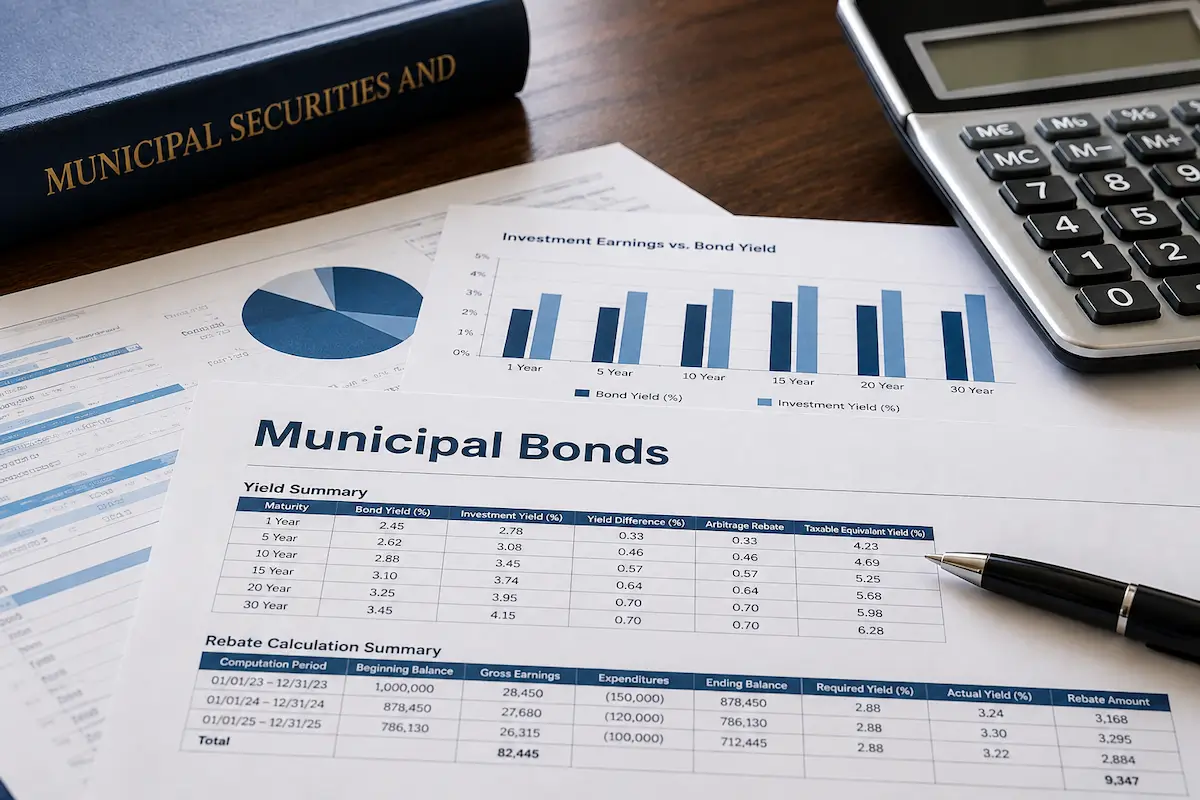
For issuers of tax-exempt bonds, ongoing arbitrage compliance involves several requirements that can continue long after bonds are issued. Two terms that frequently come up during this process are arbitrage rebate and yield restriction. While the two requirements are closely related, they are not the same. Understanding the difference between arbitrage rebate and yield restriction, …

For bond issuers who issued bonds in late 2020 or early 2021, the end of the initial 3-year temporary period marked a critical juncture. If proceeds remained at this 3-year mark, a yield restriction calculation is required on the 5th year filing date. Performing interim yield restriction calculations now can help you stay ahead of …

Municipal issuers and their advisors continue to navigate a changing landscape when it comes to arbitrage rebate and yield restriction compliance. As federal regulations evolve and market dynamics shift, staying informed about trends in these areas is more crucial than ever. In this blog post, we’ll break down what’s happening now and what’s on the …

Arbitrage rebate compliance represents one of the more complex areas of bond management and spending exceptions have emerged as a key strategy for issuers to minimize their potential tax liabilities. Spending exceptions are helpful tools that allow debt issuers to keep all investment earnings upon meeting certain criteria. They also provide a strategic pathway for …

Five-year arbitrage rebate reporting stands as a key milestone that demands careful attention within your bond compliance process. Within the last five years, we have witnessed both low borrowing rates and a sharp increase in the federal funds rate. This drastic change in the rate environment could mean that your unspent proceeds are quietly racking …